

Ring roads change how a city grows — not overnight, and not everywhere equally. Jaipur's Northern Ring Road is one of the more consequential infrastructure projects on the city's radar, and it's already shaping investor conversations about the areas it touches. Here's a grounded look at what it could mean, and what it doesn't automatically mean.
What a ring road is designed to do
A ring road's core job is to let through-traffic bypass the city centre — freight, inter-city travel and cross-city commutes that don't need to enter congested inner areas. Done well, this improves travel times both on the ring itself and, indirectly, inside the city as traffic redistributes. For property along the corridor, better connectivity to highways, industrial areas and neighbouring towns is the direct benefit.
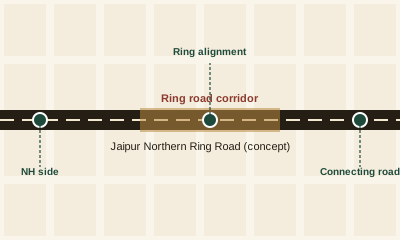
Areas that could see an effect
Locations along or near a ring-road alignment typically see interest for a mix of reasons: improved logistics access (useful for warehousing and light industrial use), easier commuting for residential pockets that were previously considered "far," and knock-on commercial activity — fuel stations, dhabas, showrooms and warehousing — that tends to cluster along new arterial roads once traffic volumes justify it.
That said, "near the ring road" covers a very wide area, and not all of it benefits equally. Proximity to an interchange or a junction with an existing arterial road (like Ajmer Road or Tonk Road) tends to matter far more than simple straight-line distance to the ring road itself.
What an 8-lane road or ring road does not guarantee
It's worth repeating a point we make across our infrastructure coverage: a road project improves accessibility and can support demand, but it doesn't override the fundamentals of a specific property. A plot with an unclear title, no legal access, or unresolved land-use status doesn't become a sound investment just because a ring road passes nearby.
What buyers should watch and verify
- The confirmed alignment — has the final route been notified, or is it still under discussion? Alignments can shift before finalisation.
- Whether the specific plot has legal, usable access — not just visual proximity on a map
- Land-use classification and any conversion required — see how to check land use before buying
- Title, JDA approval and encumbrance status — see our Land Due Diligence checklist
- Whether civic infrastructure (water, sewage, power) already exists or is still years away
| Signal | What it tells you | What it doesn't tell you |
|---|---|---|
| Confirmed alignment/notification | Route is more likely to be fixed | Does not confirm construction timeline |
| Proximity to an interchange | Stronger connectivity value | Does not confirm land-use or title status |
| Rising local interest/prices | Market sentiment is building | Does not confirm the specific plot is clean or approved |
Evaluating a property near the Ring Road?
We can run the legal and access checks on a specific plot before you commit — free, no obligation.
Our take
Ring roads are genuine, multi-year value drivers for the corridors they touch — but the value shows up unevenly, concentrated near interchanges and existing demand centres, and it takes years to fully materialise. Treat the ring road as one input into a decision, evaluated alongside title, approvals and access on the specific property — not as the decision itself.
Frequently Asked Questions
Which areas benefit most from a ring road?
Locations near interchanges with existing arterial roads, and areas already showing residential or industrial demand, tend to benefit more than areas simply within a wide radius of the ring road.
Does proximity to the ring road guarantee price appreciation?
No. Appreciation still depends on the specific property's title, legal access, land use and approval status. Infrastructure is one factor among several.
How do I check if a ring-road alignment is final?
Check JDA's official notifications and Master Plan updates rather than relying on informal reports, since alignments can shift before formal notification.
Sources & Further Reading
This article is general research and analysis, not legal, valuation or investment advice. Rules, approvals, project timelines and site-specific conditions can change. Readers should verify current records with the relevant authority before purchasing land, constructing, or relying on an infrastructure proposal.
Related Tools & Checklists
Free calculators and due-diligence checklists relevant to this topic — no sign-up required.