

Agricultural land on Jaipur's outskirts is often priced attractively — sometimes attractively enough to tempt a buyer into skipping the one question that matters most: is this actually approved for the use you intend? Here's how agricultural and residential land differ, and what each requires from a buyer.
The core distinction
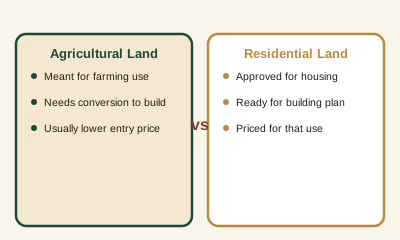
Residential land is classified under the applicable Master Plan for housing use and, subject to building-plan approval and other rules, can generally support construction of a home. Agricultural land is classified for farming use — and until it goes through formal conversion (see our guide to land conversion), it cannot legally be used for residential or commercial construction, regardless of what's informally built on it.
Why agricultural land is priced lower — and why that's not automatically a bargain
Agricultural land typically carries a lower price per unit area than approved residential land in a comparable location, partly because it comes with the conversion risk and cost still ahead of the buyer. A lower headline price can look attractive, but it needs to be weighed against the conversion process, cost, timeline and uncertainty involved — plus the risk that conversion doesn't proceed as expected.
Checks specific to agricultural land
- Whether it's already converted, and if so, whether the conversion covers your specific parcel
- What conversion would realistically cost and how long it would take, if not yet done
- Whether any government restrictions apply to that agricultural parcel (e.g. protected categories, restricted zones)
- Revenue records (khasra/khatauni) matching the seller's claims
Checks specific to residential land
- JDA or competent-authority approval — see plot vs colony approval
- Applicable FAR, height and setback rules for your construction plans
- Clear title and encumbrance status
- RERA registration, where applicable
| Agricultural Land | Residential Land | |
|---|---|---|
| Immediate use | Farming only | Housing, subject to building plan approval |
| Typical price | Lower per unit area | Higher, reflects approved status |
| Key risk | Conversion may be incomplete, delayed or contested | Title, approval and construction-compliance risk |
| Key document | Conversion certificate (if converted) | Patta / building plan sanction |
Weighing agricultural land against a residential plot?
Share the details of both options and we'll help you compare the real cost — including conversion, if relevant.
Key takeaway
A lower asking price on agricultural land isn't automatically a better deal — it can simply mean the conversion cost and risk haven't been priced in yet. Compare like-for-like: the fully verified, all-in cost of each option, not just the headline number.
Frequently Asked Questions
Can I build a house on agricultural land right away?
No — agricultural land must be formally converted before residential construction is legally permitted on it.
Is agricultural land always cheaper than residential land nearby?
Typically yes, per unit area, but the difference should be weighed against the conversion cost, timeline and risk before assuming it's the better deal.
How do I know if agricultural land near me has already been converted?
Check for a conversion certificate specific to that parcel, and cross-verify against revenue records rather than relying on the seller's description alone.
Sources & Further Reading
This article is general research and analysis, not legal, valuation or investment advice. Rules, approvals, project timelines and site-specific conditions can change. Readers should verify current records with the relevant authority before purchasing land, constructing, or relying on an infrastructure proposal.
Related Tools & Checklists
Free calculators and due-diligence checklists relevant to this topic — no sign-up required.