

A 1,000 sq yd plot doesn't mean 1,000 sq yd of buildable footprint. Setback rules — the mandatory open margins between your plot boundary and the building itself — take a real bite out of what you can actually construct, and they're one of the most commonly misunderstood rules among first-time plot owners in Jaipur.
What a setback actually is
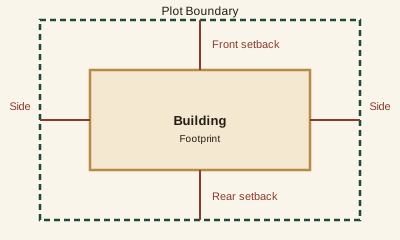
A setback is the minimum distance a building must maintain from the edges of the plot — typically specified separately for the front, rear and both sides. These margins exist for reasons including light and ventilation, fire safety and emergency access, and maintaining a consistent street character. They apply on top of whatever your FAR/FSI allows, meaning the two rules work together to define your actual buildable envelope.
Why setbacks vary — and why a "standard number" can mislead
Setback requirements typically vary by plot size, road width, land use and, in some cases, building height (taller structures can require larger setbacks). A margin quoted for one plot size or category may not apply to yours. This is one more reason a number picked up informally from a neighbour's plot or a general online article shouldn't be treated as reliable for your own construction plan.
What happens if setbacks aren't followed
Construction that violates setback norms can face rejection at the plan-approval stage, or — if built without approval — can create serious problems at resale, at the completion/occupancy certificate stage, or in the event of a compliance action by the authority. This is exactly why a completed structure "existing" on the ground isn't proof that it was built to the approved plan. See our guide on Occupancy vs Completion Certificate for how this gets verified.
Checklist before you plan or buy
- Confirm the applicable setback requirements for your exact plot size, road width and land use
- If buying a constructed property, check whether the actual structure matches the setbacks shown in the sanctioned plan
- Watch for visibly encroaching construction on adjoining plots — a pattern worth treating cautiously; see 15 red flags when buying a plot
- Factor setbacks into your own construction budget and design before committing to a floor plan
| Setback side | Common purpose |
|---|---|
| Front | Street setback, light, and often parking/approach space |
| Rear | Ventilation, emergency access, and separation from adjoining property |
| Sides | Light, ventilation and fire-safety separation between structures |
Working out a building plan for your plot?
Share your plot dimensions and we'll help you understand what to confirm before your architect finalises the layout.
Key takeaway
Setback margins are non-negotiable technical requirements, not design preferences — and they meaningfully shrink your usable footprint versus the raw plot size. Confirm the exact applicable margins for your plot before you commit to a floor plan, a purchase price calculation, or a construction budget.
Frequently Asked Questions
Are setback rules the same for every plot size in Jaipur?
No. Setback requirements commonly vary by plot size, road width and land use, so a margin that applies to one plot may not apply to another.
Can setbacks be waived if a neighbour's building doesn't follow them?
No — an adjoining structure not following setback norms is not a valid basis for your own plan, and can itself be a red flag about that structure's legal status.
Where do I confirm the exact setback for my plot?
Through the competent authority's applicable building bye-laws for your plot's category, road width and zone — ideally cross-checked by a registered architect at the plan-approval stage.
Sources & Further Reading
This article is general research and analysis, not legal, valuation or investment advice. Rules, approvals, project timelines and site-specific conditions can change. Readers should verify current records with the relevant authority before purchasing land, constructing, or relying on an infrastructure proposal.
Related Tools & Checklists
Free calculators and due-diligence checklists relevant to this topic — no sign-up required.