

Behind every legally sanctioned building plan in Jaipur is a professional whose sign-off is meant to mean something: a registered architect. Here's what that role actually involves under the current regulatory framework, and why it's worth checking for as a buyer, not just as a homeowner planning to build.
What "registered" means
A registered architect holds recognised professional qualification and registration status, entitling them to certify building plans and related compliance matters under the applicable rules. This registration is what allows their certification to carry legal weight with the competent authority — an unregistered or informally practising individual cannot provide the same standing.
Core responsibilities under the 2025 framework
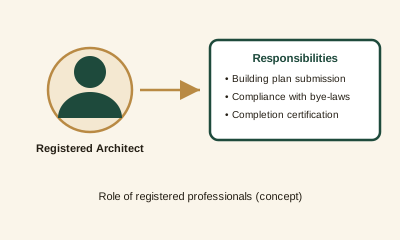
- Building plan preparation and submission — ensuring the plan reflects the plot's actual dimensions and the applicable FAR, height and setback rules
- Compliance certification — confirming the design meets the applicable bye-laws before submission to the competent authority
- Completion certification — in specified cases, certifying that completed construction matches the sanctioned plan
These responsibilities are why involving a registered architect early in your project — before finalising a design — is more useful than bringing one in only to "sign off" on a plan someone else has already drawn up.
Why this matters to a property buyer, not just a builder
If you're buying a constructed property, ask whether the building plan was prepared and certified by a registered architect, and whether the completion documentation carries the required professional certification. This is a meaningful signal about how carefully the construction process was managed — a home built without proper architectural certification is more likely to carry undocumented deviations from what would have otherwise been approved.
How this connects to the rest of the approval process
| Stage | Architect's role |
|---|---|
| Design | Ensuring FAR, height and setback compliance from the outset |
| Submission | Preparing and submitting the building plan for approval |
| Scrutiny | Responding to authority queries and revisions where needed |
| Completion | Certifying that construction matches the sanctioned plan, in specified cases |
See our step-by-step overview of the building plan approval process and the distinction between occupancy and completion certificates for how this fits into the full sequence.
Planning construction and want to engage the right professional?
Talk to us about your project — we can help you understand what to look for when engaging a registered architect for your plot.
Key takeaway
A registered architect's role isn't paperwork — it's a professional compliance safeguard built into the approval process. Whether you're building or buying, checking for genuine, verifiable architectural certification is one of the simplest ways to reduce your construction-compliance risk.
Frequently Asked Questions
How do I confirm an architect is genuinely registered?
Registered architects hold recognised professional qualification and registration status — ask for their registration details and verify through the applicable professional body or council.
Does hiring a registered architect guarantee my plan will be approved?
No — it significantly improves the odds of a compliant submission, but approval still depends on the specific plot meeting all applicable rules.
Is architect certification required for every building, regardless of size?
Requirements can vary by project type and scale under the applicable framework — confirm the current requirement for your specific project.
Sources & Further Reading
This article is general research and analysis, not legal, valuation or investment advice. Rules, approvals, project timelines and site-specific conditions can change. Readers should verify current records with the relevant authority before purchasing land, constructing, or relying on an infrastructure proposal.
Related Tools & Checklists
Free calculators and due-diligence checklists relevant to this topic — no sign-up required.